





How to Choose a Reliable Wholesale Produce Supplier in Ontario
Choosing the right wholesale produce supplier in Ontario is an important decision for restaurants, institutions, catering companies and other foodservice businesses. A reliable supplier does more than deliver fruits and vegetables. The right partner helps your operation maintain product quality, manage changing demand, reduce supply disruptions and keep your kitchen running efficiently.
When comparing produce suppliers, businesses should look beyond price alone. Product consistency, sourcing capabilities, delivery reliability, service responsiveness and knowledge of the foodservice industry can have a much greater impact on daily operations.
This guide explains the key factors to consider when choosing a wholesale produce supplier in Ontario and how to identify a partner that can support your business over the long term.
Look for Consistent Product Quality
Product quality should be one of the first factors you evaluate when choosing a wholesale produce supplier.
Fresh produce naturally varies by season, growing conditions and availability. However, a dependable supplier should have sourcing and quality-control processes that help maintain consistent standards across deliveries.
For foodservice businesses, consistency matters because ingredients directly affect preparation, presentation and customer experience. A restaurant needs tomatoes, lettuce, herbs and other produce to arrive in a condition that supports its menu. Institutions and high-volume kitchens also need products that can perform consistently across large quantities.
When evaluating a supplier, consider how they source their products, how produce is handled and whether they work with established growers and suppliers.
A strong produce partner should also communicate when market conditions affect quality or availability instead of simply sending a product that does not meet expectations.
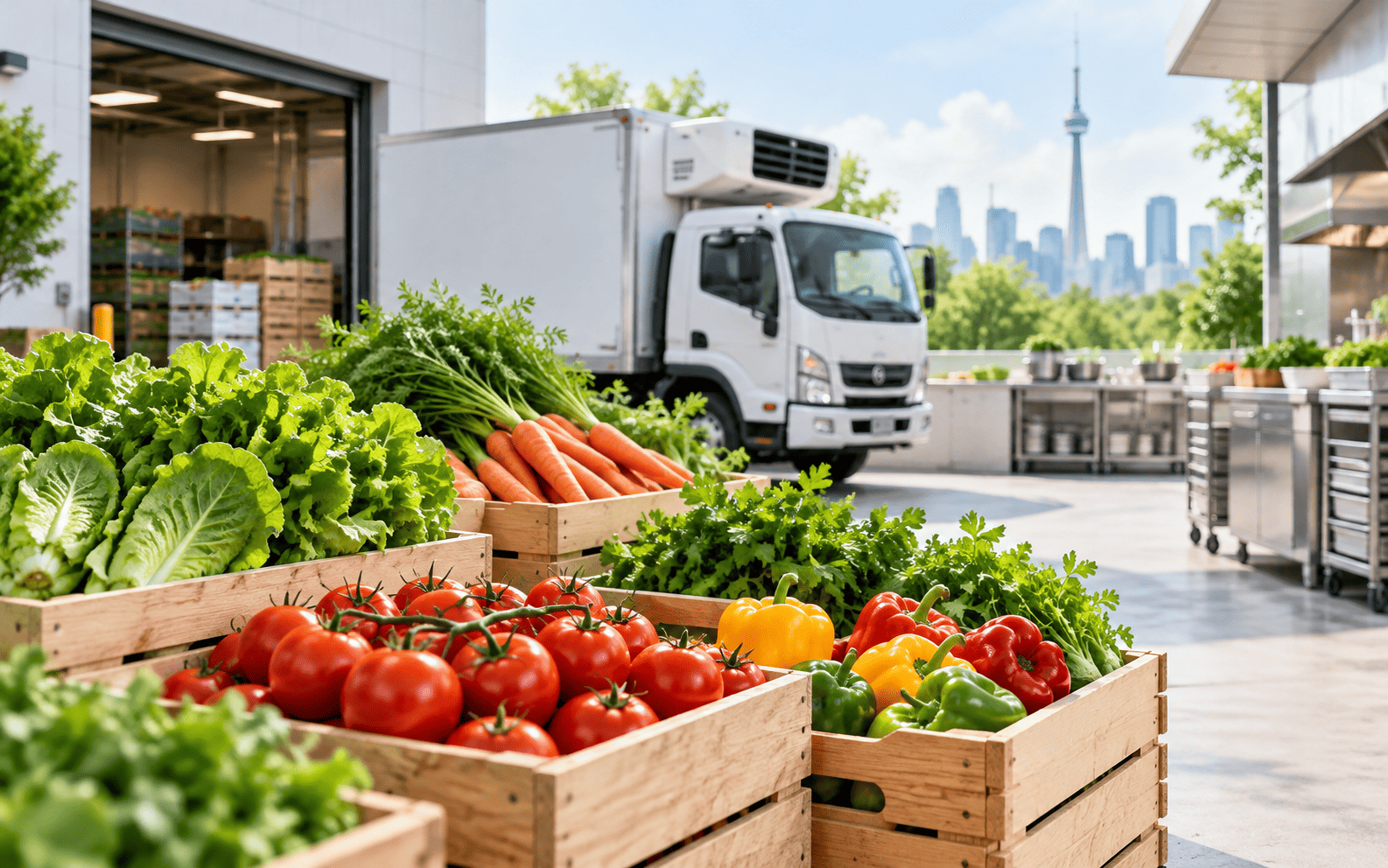
Consider the Range of Products Available
A reliable produce wholesaler in Ontario should be able to support more than one part of your produce program.
Depending on your operation, you may need:
- Fresh fruits
- Fresh vegetables
- Fresh herbs
- Ontario-grown produce
- Specialty and imported products
- Fresh-cut vegetables and fruits
- Value-added or processed produce
Working with a supplier that offers a broad selection can simplify purchasing and reduce the number of vendors your team needs to manage.
Product range is especially important for businesses with changing menus, seasonal programs or specialty requirements. A restaurant may need everyday produce throughout the year while also sourcing specific local items during Ontario's growing season.
The right supplier should be able to balance regular products with seasonal and specialty sourcing.
Evaluate Local and Global Sourcing Capabilities
Ontario businesses can benefit from working with suppliers that understand both local agriculture and broader produce markets.
Local sourcing can help businesses support Ontario growers and take advantage of seasonal products grown closer to home. At the same time, Ontario's climate means many fruits and vegetables are not available locally throughout the entire year.
That is why a strong sourcing program should not depend on one market alone.
A capable wholesale produce supplier can combine Ontario-grown produce with products sourced from other regions to maintain availability throughout the year.
This approach gives foodservice businesses more flexibility. Local produce can be prioritized when it is in season, while established global supply relationships can help fill gaps when certain products are unavailable in Ontario.
The goal is not simply to buy local or imported produce. The goal is to build a reliable sourcing program that matches the needs of your operation.
Check Distribution and Delivery Reliability
Fresh produce has a limited shelf life, so distribution plays a major role in product quality.
A dependable supplier should have systems in place to move fresh products efficiently from sourcing and storage to the customer's location.
For foodservice businesses, late or inconsistent deliveries can create serious operational problems. Kitchen teams may need to adjust menus, purchase emergency ingredients or spend additional time managing shortages.
When choosing a supplier, ask whether their distribution network can support your location and delivery requirements.
Businesses in Southwestern Ontario and the Greater Toronto Area should also consider whether the supplier has sufficient regional coverage to provide dependable service as their needs grow.
Refrigerated distribution is another important consideration. Appropriate temperature control during transportation helps protect product integrity and supports consistent quality from the warehouse to the customer.
Choose a Supplier That Understands Foodservice
Foodservice operations have different needs from retail consumers.
Restaurants, universities, institutions, hospitals, hotels and catering companies often work with strict schedules, high volumes and specific product requirements. A supplier that understands these environments can provide more useful support.
For example, a foodservice customer may need assistance with:
- Selecting an alternative product when an item is unavailable
- Planning around seasonal availability
- Finding a product that matches a particular specification
- Managing large or recurring orders
- Coordinating delivery requirements
- Sourcing specialty ingredients
The best supplier relationships are based on understanding how the customer operates.
Instead of simply taking orders, a strong supplier becomes a resource that helps customers make practical purchasing decisions.

Look for Fresh-Cut and Value-Added Options
Prepared produce can provide additional value for commercial kitchens.
Fresh-cut and value-added products may include vegetables and fruits that are washed, peeled, chopped, sliced or otherwise prepared according to customer requirements.
These products can help foodservice operations reduce preparation time and simplify high-volume kitchen work.
For businesses dealing with staffing pressure or large production requirements, fresh-cut products may also help create more consistent preparation processes.
However, not every operation requires the same processing specifications. A reliable supplier should be able to explain available options and help customers determine whether processed produce makes sense for their kitchen.
When comparing suppliers, look at both the quality of the product and the level of flexibility available.
Responsive Customer Service Matters
Problems can happen in any fresh food supply chain. Market shortages, weather conditions, transportation issues and changing customer demand can all affect produce availability.
The difference often comes down to how the supplier responds.
A reliable supplier should provide clear and timely communication when an issue occurs. Customers should know who to contact and receive useful information about possible substitutions, revised availability or delivery changes.
Dedicated account support can be particularly valuable for businesses that purchase frequently.
When your supplier knows your regular products, delivery requirements and operational priorities, it becomes easier to resolve problems and plan ahead.
Strong customer service is therefore not separate from distribution. It is part of a dependable produce program.
Compare Value, Not Just Price
Price is important, but the lowest unit price does not always produce the lowest overall cost.
Poor product quality can increase waste. Inconsistent deliveries can create emergency purchases. Products that require excessive trimming or preparation can increase labour costs.
When evaluating a wholesale produce supplier in Ontario, consider the complete value being provided.
That includes:
- Product quality
- Consistency
- Delivery reliability
- Product availability
- Customer support
- Processing options
- Sourcing expertise
- Responsiveness when problems occur
A supplier that performs well across these areas can help your operation reduce unnecessary disruptions and operate more efficiently.
Build a Long-Term Produce Partnership
The strongest supplier relationships develop over time.
A produce supplier learns how your business operates, while your team gains confidence in the supplier's products, service and communication.
For this reason, businesses should look for a partner that is interested in building a relationship rather than simply completing individual transactions.
Since 1994, Green City & Green Liner Produce has served foodservice customers across Southwestern Ontario and the Greater Toronto Area. With operations in London, Guelph and Hamilton, the company provides fresh fruits and vegetables, Ontario and local produce, specialty products, fresh-cut and processed produce, and refrigerated distribution.
Our approach is built around three priorities: quality products, dependable service and strong relationships.
If your organization is looking for a reliable wholesale produce supplier in Ontario, contact Green City & Green Liner Produce to discuss your product and distribution needs.